
How to Ask: Show Me a Photo of It
In our fast-paced, highly visual digital world, words often fall short. Whether you are buying a second-hand item online, trying to understand a complex problem, or simply catching up with a friend, there comes a point where you just have to say, “show me a photo of it.”
Visual communication bridges the gap between imagination and reality. However, knowing how to formulate a photo request effectively—whether you are asking a human being or prompting a search engine—is an essential modern skill. This comprehensive guide will explore how to ask for photos politely, how to use images to find other images, and how artificial intelligence is changing the way we discover the world around us.

The Art of the Perfect Photo Request
When dealing with other people online, the way you ask for an image dictates the quality of the response you will get. From casual conversations to professional exchanges, clarity is key.
Be Specific and Polite in Personal Chats
Imagine a friend texts you to say they just set up a blind date. Naturally, your first instinct is to ask, “show me a photo of her” (or him). In personal contexts, casual requests are expected.
However, in online marketplaces like Craigslist or Facebook Marketplace, a different tact is required. If a seller lists a used guitar but only provides one blurry image, you shouldn’t just demand a better one. Instead, politely ask, “I am very interested in this guitar; can you show me a photo of it from the back to check for scratches?” Specificity ensures you get the exact visual information you need before making a purchase.
Context Matters: From Pop Culture to Pet Health
Online communities thrive on shared visuals. In a vibrant anime forum, a fan might want to see an image showcase of a popular character and type, “show me a photo of gojo using his domain expansion.” Because the community understands the context, the request is easily fulfilled.
Interestingly, precise visual requests are also vital in professional telehealth spaces. For instance, if you are consulting a remote veterinarian because your dog is sick, the vet might literally ask you to “show me a photo of poop.” While it sounds unappealing, checking a pet’s stool is a crucial diagnostic tool. In this context, submitting a clear, well-lit photo could save your pet’s life.
Navigating Voice Assistants and Smart Displays
We don’t just ask humans for photos; we ask our devices, too. The way we speak to AI often includes conversational fillers. When talking to a smart home device, users frequently say things like, “Hey device, show me a photo of the Eiffel Tower,” or they might stumble over their words and say, “show me show me a picture of a golden retriever.”
Similarly, when brainstorming home decor, you might tell your smart display, “show me some pictures of some modern kitchen designs.” Search engines are now optimized to understand these conversational, sometimes clunky, verbal requests and deliver accurate visual galleries in seconds.

Moving Beyond Text: Visual Search Technology vs Traditional Text Search
For decades, if we wanted to find an image, we had to rely on typing text into a search bar. If you saw a strange bug and wanted to know what it was, you had to type a clunky description: small green bug with six legs and red spots.
Today, the landscape has completely shifted. When comparing visual search technology vs traditional text search , the former wins hands down for object identification. Instead of struggling to describe something with words, you can simply show the search engine a picture. This shift is powered by advanced artificial intelligence for image recognition, which analyzes the shapes, colors, and pixels in your image to find exact matches or visually similar items across the web.
Mastering Reverse Image Search Techniques
Sometimes you already have a photo, but you need more information about it. This is where reverse image search techniques come into play. Instead of using text to find a photo, you use a photo to find text—or to find where else that photo exists online.
1. Verify Image Source and Authenticity
In an era of deepfakes, AI-generated art, and widespread misinformation, knowing how to verify image source and authenticity is a critical digital literacy skill. If you see a viral image of a politician doing something outrageous, you can upload that image to a reverse search engine. The results will show you the earliest date the image was published, helping you determine if it is a genuine news photo or an old image being taken out of context.
2. How to Find Similar Images Online
Are you a graphic designer looking for inspiration? Or perhaps you found a wallpaper aesthetic you love but want it in a different color scheme? By uploading your base image to a search engine like Google Images or Bing Visual Search, you can easily figure out how to find similar images online. The AI will present a grid of photos that share the same composition, lighting, and subject matter.
3. Finding Products by Uploading a Picture
We have all experienced the frustration of seeing a stranger wearing a fantastic pair of shoes, but not knowing the brand. Today, finding products by uploading a picture is seamlessly integrated into e-commerce. Apps like Pinterest, Amazon, and Google allow you to upload a photo of a clothing item or piece of furniture. The AI will then scan the web to find exact retail matches, complete with prices and links to buy.

A Step-by-Step Guide to Visual Discovery
If you are new to using your camera as a search tool, don’t worry. Here is a practical, step-by-step guide to visual discovery that will turn you into an expert in no time.
Utilizing Google Lens Features for Beginners
Google Lens is arguably the most powerful accessible tool for visual search. Here are a few Google Lens features for beginners that you should try today:
- Open the App: Open the Google app on your smartphone and tap the camera icon next to the search bar.
- Point and Shoot: Aim your camera at an object and tap the shutter button.
- Highlight Specifics: Use your finger to adjust the crop marks around a specific part of the image (like the logo on a shirt) to narrow down your search.
- Swipe Up for Results: Swipe up to see visually similar images, shopping links, and informational articles.
Best Visual Search Apps for Identification
While Google Lens is a fantastic all-rounder, there are several other best visual search apps for identification tailored to specific niches:
- Seek by iNaturalist: Perfect for nature lovers looking to identify flora and fauna.
- Pinterest Lens: The absolute best choice for fashion, interior design, and DIY inspiration.
- CamFind: A great general-purpose visual search engine that provides highly accurate descriptions of uploaded images.
- Vivino: An incredibly specific visual search app where you can snap a photo of a wine label to see reviews and flavor profiles.
How to Search Using a Screenshot
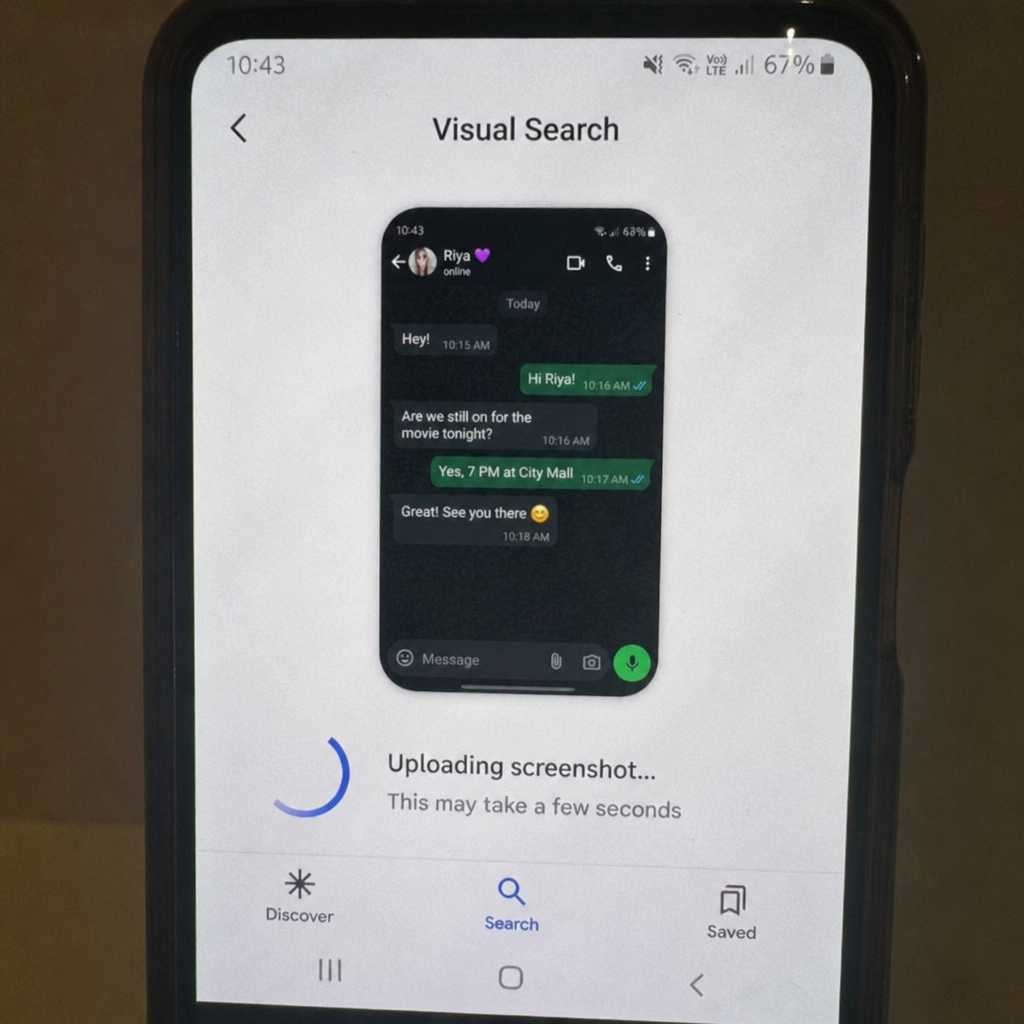
You don’t always have to take a fresh photo to use visual search. If you are scrolling through Instagram or watching a YouTube video and see something interesting, you can simply take a screenshot. Learning how to search using a screenshot is easy: capture your screen, open your preferred visual search app, and select the photo gallery icon instead of the live camera. Select your recent screenshot, and the app will scan the digital image just as effectively as a live photograph.
Computer Vision Benefits for Daily Tasks
The underlying technology behind visual search is called “computer vision.” The computer vision benefits for daily tasks are virtually limitless, transforming our smartphones into digital Swiss Army knives.
Identifying Objects Using Smartphone Camera
Have you ever found a strange tool in your garage or a weird cable in your junk drawer and wondered what it does? Identifying objects using smartphone camera technology eliminates the guesswork. By simply pointing your camera at the mystery object, AI can instantly tell you it is a proprietary charging cable for an old smartwatch or a specialized plumbing wrench.
Translate Text from Pictures Using Mobile Apps
One of the most magical applications of computer vision is the ability to bypass language barriers. If you are traveling abroad and staring at a menu written in a language you don’t understand, you can easily translate text from pictures using mobile apps. Just point your camera at the text, select the “Translate” filter in Google Lens, and watch as the foreign words magically shift into your native language right on your screen.
Identify Plants and Animals from Photos
For hikers, gardeners, and curious minds, the ability to identify plants and animals from photos is a game-changer. If you spot a beautiful wildflower on a trail, snapping a photo will not only tell you its scientific name but also whether it is native to your area or potentially poisonous. Similarly, bird watchers can use their cameras to instantly identify a rare species resting in their backyard.
Identifying Landmarks Through Visual Lookup
Travelers can also benefit immensely from visual search. If you are wandering through an unfamiliar city and stumble upon a beautiful historical building with no signage, you don’t have to remain in the dark. Identifying landmarks through visual lookup is as simple as framing the building in your camera. The search engine will instantly provide the name of the monument, its historical significance, operating hours, and even nearby restaurant recommendations.

Final Thoughts: Embracing the Visual Web
We have moved far beyond the days of relying solely on text to navigate the internet. Whether you are politely messaging a seller to say, “can you show me a photo of it,” using a screenshot to track down a pair of vintage boots, or relying on AI to translate a foreign street sign, imagery is the new language of the web.
By mastering how to request photos effectively and learning how to leverage reverse image search and computer vision, you can unlock a deeper, more accurate, and much more engaging digital experience. The next time you are confused, curious, or looking for inspiration, don’t struggle to find the right words. Just let the pictures do the talking.
Q&A
Question: How should I phrase a photo request in different situations?
Short answer: Match your tone and detail to the context. In personal chats, casual requests like “show me a photo of her” are fine. In marketplaces, be polite and specific—e.g., “I’m very interested; can you show me a photo of the back to check for scratches?” In communities, lean on shared context (e.g., “show me a photo of Gojo using his domain expansion”). In professional settings like telehealth, precise, well-lit photos (yes, even of a pet’s stool) can be essential for diagnosis. Voice assistants also understand clunky phrasing and fillers, so don’t worry if you say “show me show me a picture of…”—they’ll still parse your intent.
Question: When is visual search better than traditional text search?
Short answer: Use visual search when you can show rather than describe—especially for object identification. Instead of typing “small green bug with red spots,” upload a photo. AI-powered image recognition analyzes shapes, colors, and pixels to find exact or visually similar matches faster and more accurately than text descriptions.
Question: How can I verify a photo’s source or authenticity?
Short answer: Use reverse image search. Upload the image to a reverse search engine and review:
- Where else it appears online
- The earliest publication date you can find
- This helps you spot old photos reused out of context, manipulated images, or AI-generated content masquerading as news.
Question: What’s the easiest way to start with Google Lens—and can I search using a screenshot?
Short answer:
- With Google Lens: Open the Google app, tap the camera icon, point at the object, adjust the crop to highlight specifics (like a logo), then swipe up for results (similar images, shopping links, info).
- With a screenshot: Take a screenshot, open your visual search app, choose the gallery/photo icon, select the screenshot, and let the app scan it just like a live photo.
- Tip: Beyond Lens, niche apps can help too (Seek by iNaturalist for nature, Pinterest Lens for decor/fashion/DIY, CamFind for general descriptions, Vivino for wine labels).
Question: What everyday tasks can my phone’s computer vision help with?
Short answer:
- Identify mystery objects (tools, cables) just by pointing your camera
- Translate text in real time from signs and menus with a “Translate” filter
- Identify plants and animals, including names, native range, or safety notes
- Recognize landmarks and surface details like history, hours, and nearby places