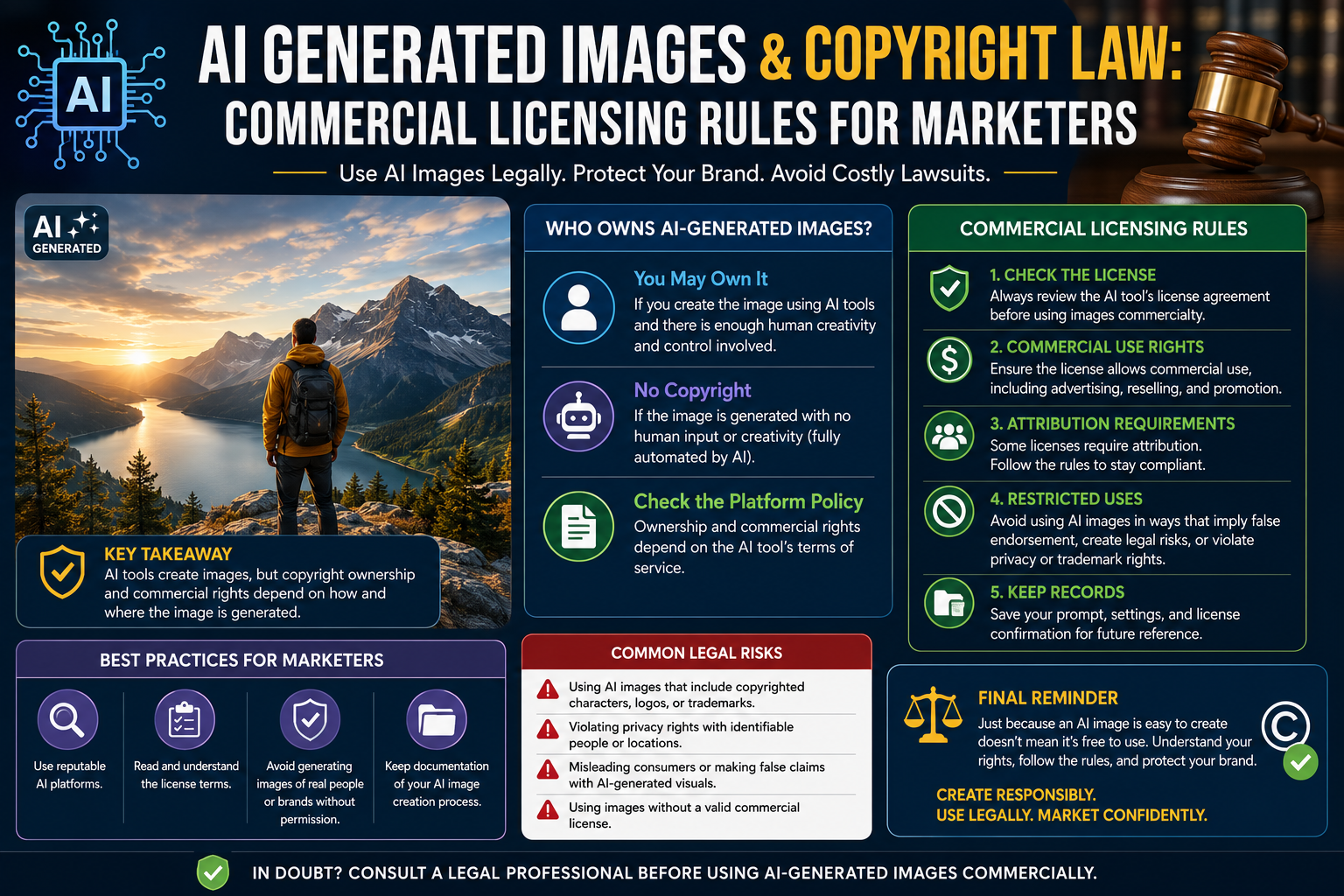
AI Generated Images & Copyright Law: Commercial Licensing Rules for Marketers

Quick Executive Summary: Navigating ai generated image copyright law is essential for businesses using AI-created visual content. Under current statutory guidance, purely prompt-generated AI images cannot be registered for copyright protection due to the lack of human authorship. However, the commercial use of ai images remains legal, provided the generated outputs do not infringe on existing trademarks, copyrights, or individual likeness rights.
The Rise of Generative AI in Commercial Content Creation
Generative AI text-to-image models have revolutionized how marketing teams, creative directors, and publishing outlets source visual assets. While generating high-resolution graphics takes seconds, understanding ai generated image copyright law is critical to preventing intellectual property vulnerabilities.
Because the legal framework surrounding generative AI continues to evolve globally, businesses must establish clear internal policies before replacing traditional stock photo licensing with purely AI-generated visuals.
Can You Copyright AI Generated Images? The Human Authorship Rule
The fundamental question modern creators ask is: can you copyright ai generated images? Under official us copyright office ai image guidance, purely AI-generated works produced via text prompts lack the requisite “human authorship” to receive federal copyright protection.
- Pure Text Prompts: Entering prompts into an AI generator does not qualify a user as an author under copyright law, meaning the resulting output immediately falls into the public domain.
- Human-AI Hybrid Works: If a human artist significantly edits, modifies, or combines AI elements with original human digital art, copyright protection may extend to the human-authored contributions only.
Competitive Risk: Because unedited AI images cannot be copyrighted, your competitors can legally copy and use your AI-generated brand assets without fear of copyright infringement claims.
Commercial Use of AI Images: Terms of Service vs. Copyright Law
It is crucial to distinguish between copyrightability and commercial usage rights. You do not need to hold a copyright on an image to use it commercially.
However, your right to leverage commercial use of ai images depends heavily on platform-specific ai image licensing rules:
- Free-Tier Limitations: Many AI platforms restrict free-tier outputs to non-commercial personal usage.
- Paid Commercial Tiers: Paid subscriptions generally grant commercial usage rights under contractual terms, but this contractual agreement does not grant legal copyright ownership over the image.
- Enterprise Stock AI Platforms: Established stock providers offer indemnified AI generators trained on fully licensed repositories, insulating corporate buyers from copyright liability.
Key Legal Risks: Training Data, Trademarks, and Publicity Rights
Even if an AI generator allows commercial usage, the generated output can still trigger external legal disputes if it incorporates protected elements:
1. Trademark & Brand Infringement
If an AI generator accidentally produces a visible brand logo, trademarked character, or distinctive corporate product design, using that image commercially can trigger immediate trademark infringement claims.
2. Right of Publicity Violations
Generating realistic portraits of recognizable public figures, celebrities, or individuals without explicit consent violates statutory right-of-publicity laws, regardless of whether the image was generated by software.
3. Training Data Litigation Risks
Ongoing class-action lawsuits against AI platform developers center on the unauthorized scraping of copyrighted artist portfolios for model training. Enterprise buyers should prioritize platforms offering explicit indemnification policies.
AI Image Sourcing Comparison Matrix
| Sourcing Option | Copyright Owner | Commercial Rights | Infringement Risk |
|---|---|---|---|
| Prompt AI Output (Stand-alone) | None (Public Domain) | Allowed (Subject to TOS) | Moderate to High |
| Indemnified Enterprise AI (Stock) | None / Platform Cleared | Fully Allowed | Very Low (Indemnified) |
| Human-Edited AI Hybrid Asset | Human Editor (Edits Only) | Fully Allowed | Low |
| Traditional Stock Photo | Photographer / Agency | Fully Allowed | Lowest Risk |
Enterprise Best Practices for AI Image Sourcing & Legal Safety
- Utilize Indemnified Commercial AI Tools: Source AI imagery through commercial stock platforms that offer explicit legal indemnification clauses.
- Inspect Outputs for Trademarks & Likenesses: Audit every AI-generated asset for unintended logos, trademarked designs, or recognizable human likenesses before launching ad campaigns.
- Maintain Prompts and Workflow Documentation: Keep detailed records of generation tools, prompt logs, and human editing workflows to support ownership claims if challenged.
- Combine AI with Human Craftsmanship: Add significant original human design work to AI-generated base assets to strengthen creative control and establish partial copyright protection.
Need Legally Secure Visual Assets for Your Business?
Avoid ownership disputes and copyright risks. Source fully cleared, high-resolution stock imagery backed by commercial terms.
Explore Safe Commercial Stock Assets