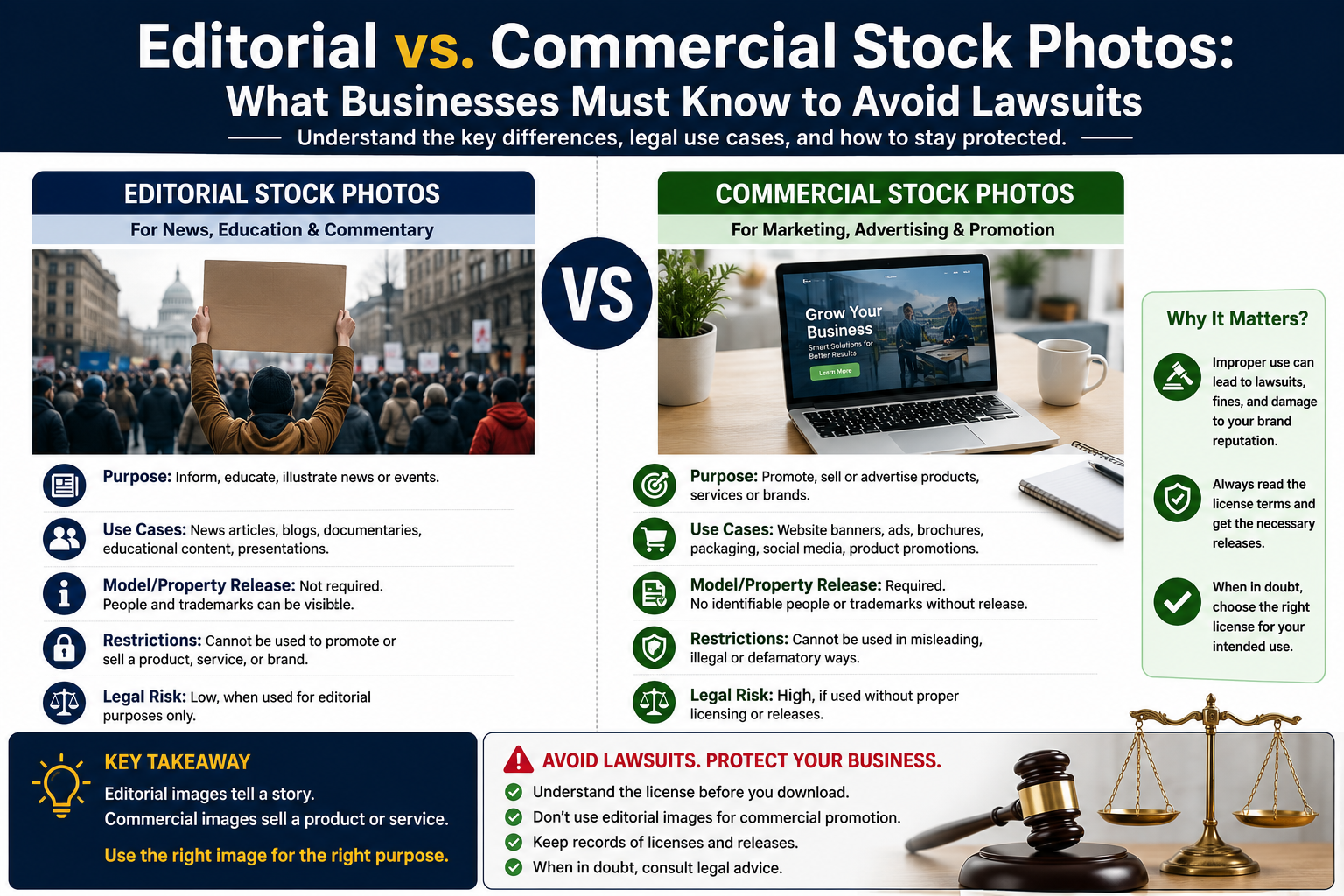
Editorial vs. Commercial Stock Photos: What Businesses Must Know to Avoid Lawsuits

Quick Executive Summary: Misinterpreting the boundary between an editorial vs commercial stock photo is one of the most frequent causes of corporate copyright infringement lawsuits. An editorial use license allows visual placement strictly in news reporting, educational materials, and non-promotional commentary. Conversely, fulfilling commercial stock photo requirements demands explicit model releases and property clearances for any asset deployed in marketing, social ads, or brand campaigns.
Why Licensing Classification Matters for Corporate Compliance
Using stock assets in digital publishing and corporate marketing requires strict adherence to license terms. Many digital marketers incorrectly assume that purchasing a license from a major stock photo marketplace grants unrestricted usage rights across all platforms.
When selecting an editorial vs commercial stock photo, choosing the wrong license tier can expose your organization to severe liabilities, including statutory damages, right-of-publicity claims, and formal brand cease-and-desist orders.
What Is an Editorial Use License?
An editorial use license covers visual media intended solely for informational, journalistic, commentary, or educational purposes. These photos often feature recognizable people, private property, or brand logos without signed release forms.
Common authorized use cases for editorial photos include:
- Newspaper & Magazine Articles: Accompanying breaking news or analytical journalism.
- Documentaries & Educational Materials: Supporting factual storytelling and textbook illustrations.
- Non-Promotional Blog Posts: Providing context for news commentary or industry analysis (provided the surrounding page contains no direct product selling intent).
Critical Constraint: Editorial images can never be used in Facebook Ads, Google Display banners, corporate landing pages, promotional emails, or product packaging.
Commercial Stock Photo Requirements Explained
Meeting full commercial stock photo requirements is mandatory whenever an asset is deployed to generate revenue, advertise services, promote brand identity, or drive consumer sales.
A fully cleared commercial asset must satisfy three legal standards:
- Copyright Clearance: The creator explicitly grants commercial distribution rights.
- Signed Model Releases: Every recognizable individual in the image has executed a legally binding model release for commercial use.
- Signed Property Releases: Private architecture, proprietary interior designs, and corporate logos are officially cleared for commercial endorsement.
Side-by-Side Comparison: Editorial vs Commercial Stock Photos
Use this reference table when reviewing image rights for client deliverables or brand campaigns:
| Feature / Restriction | Editorial Stock License | Commercial Stock License |
|---|---|---|
| Primary Purpose | News, reporting, educational, commentary | Advertising, marketing, branding, sales |
| Model Releases Included? | No (Persons are unreleased) | Yes (Required signed contract) |
| Property Releases Included? | No (Logos/buildings unreleased) | Yes (Full property clearance) |
| Allowed in Paid Ads? | Strictly Prohibited | Allowed (Within license limits) |
| Image Alteration Allowed? | Minimal (Cropping/color grading only) | Full retouching, edits, and compositing |
| Lawsuit Risk in Marketing | Extreme Risk (Right of Publicity action) | Very Low Risk (Fully indemnified) |
High-Risk Mistakes That Trigger a Stock Photo Copyright Lawsuit
Corporate legal departments frequently deal with demand letters arising from simple mistakes made by content creation teams. Here are the top triggers for a stock photo copyright lawsuit:
1. Placing Editorial Images on Monetized Landing Pages
Publishing an editorial photograph of a celebrity or public event on a landing page that features a product pricing table violates both platform licensing terms and right-of-publicity laws.
2. Using Unreleased Street Photography in Social Media Campaigns
Grabbing “candid” street photos from free image repositories and featuring them in sponsored Instagram or LinkedIn posts without a model release for commercial use exposes your brand to direct privacy litigation.
3. Heavy Retouching of Editorial Content
Altering the visual context of an editorial photograph (e.g., editing a brand logo onto a person’s shirt) violates journalistic integrity guidelines enforced by major stock providers.
Step-by-Step Audit Guide for Corporate Image Procurement
- Define the Asset’s Placement Intent: Determine whether the image will appear in an ad creative or purely informative content before purchasing.
- Inspect License Metadata: Confirm the stock provider’s asset page explicitly displays “Commercial Use Allowed” rather than “Editorial Use Only.”
- Verify Legal Indemnification Limits: Ensure your corporate account plan includes financial indemnification coverage for commercial deployments.
- Maintain Centralized Digital Receipts: Store license certificates and receipt IDs alongside project source files in your enterprise media repository.
Need Fully Cleared Commercial Stock Visuals?
Protect your campaigns with high-resolution, commercially cleared stock assets backed by transparent licensing terms.
Browse CopyrightFreePic.com Catalog